Environmental Services: a single business unit bringing together a wide range of services, from in-situ and ex-situ remediation to waste recovery and disposal, from environmental emergency response to tank cleaning.
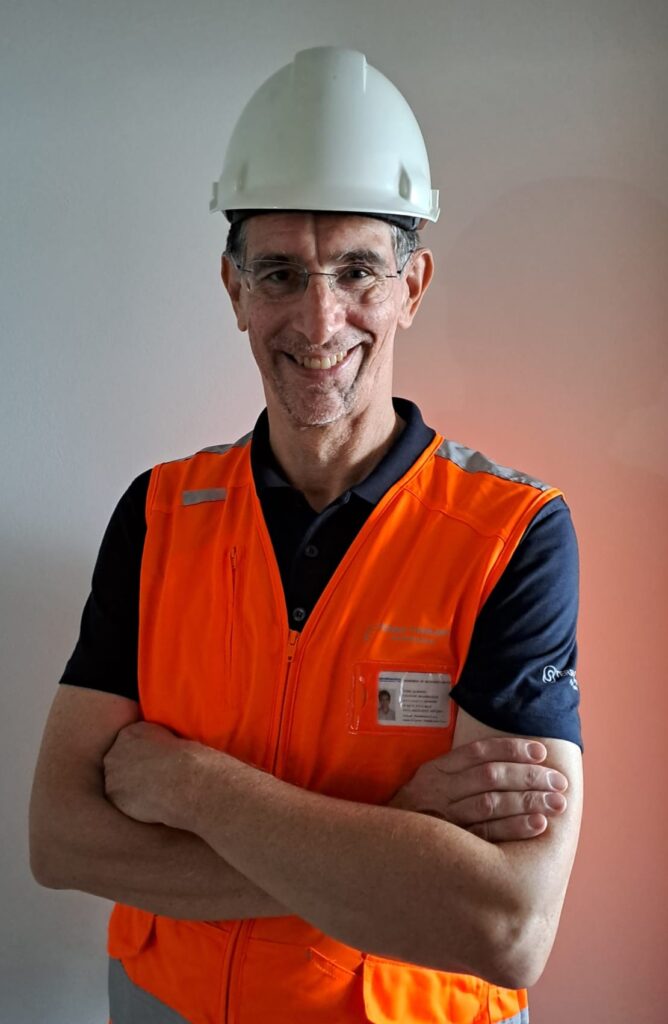
In this business unit there are many aspects to explore. That is why we asked Alberto Deambrogio, Project Manager and expert for environmental services at Petroltecnica, some key questions to better understand what this Business Unit encompasses and how many different areas of expertise are needed to manage such a diverse business area.
When is environmental remediation really complete?
Determining when a remediation project can truly be considered complete may seem straightforward, but it requires a comprehensive assessment. In Italy, the legislation establishes a process that starts with site characterization and risk assessment, continues with the design and implementation of remediation measures, and ends with the verification whether the established objectives have been met.
Remediation does not always mean eliminating every contaminant. In many cases, it means reducing contaminant concentrations or interrupting the pathways through which contamination could reach people or the environment, bringing the associated risk down to acceptable levels.
Finishing field activities does not necessarily mean that the remediation process itself is complete. Follow-up monitoring campaigns may be required, for example of groundwater, to verify that the results are stable and that no recontamination or contaminant migration occurs.
The technical results must ultimately restore tangible value to the site: remediation is truly complete when the area can once again be used safely and consistently with its intended use, without unacceptable risks to people or the environment. This may mean allowing industrial activity to continue under fully safe conditions, or making a disused area usable again, supporting its redevelopment, functional recovery and the reduction of new land consumption.
In other words, the success of a remediation project is not measured solely by the environmental parameters achieved, but by its ability to return a useful, sustainable and lasting function to the area.
When discussing remediation projects, attention often focuses on the fieldwork. How crucial is the preparatory phase to the success of an intervention? And how does the approach change when rapid action is required, for example in an environmental emergency?
The most visible part of a remediation project is certainly the operational phase: equipment, treatment systems, excavation, wells and other field activities. But behind every effective intervention there is always substantial work involving investigation, design and planning.
Before choosing a technology, it is essential to understand the site: reconstruct its history, identify the sources of contamination, understand the characteristics of the soil and groundwater, determine how contaminants move and identify potential receptors. Based on this information, we develop what we technically call as the site conceptual model. This model is fundamental to designing the intervention correctly.
A thorough preparatory phase therefore allows us to select the most appropriate solution, size it correctly, anticipate potential challenges and integrate environmental, technical, permitting, safety and economic considerations. In an emergency situation, priorities change. When an event has the potential to cause contamination, such as an accidental spill, Legislative Decree 152/2006 provides for the prompt implementation of the measures necessary to control and contain the spread of pollutants.
The approach is more dynamic. In these situations, we must act quickly, but speed does not mean improvisation. The initial objective is to bring the event under control, stop or limit the source and prevent the contamination from spreading. At the same time, we collect the necessary information to understand what happened and define the subsequent measures for securing the site, characterizing It and, where necessary, remediating it.
In emergencies, experience, sound judgement and rapid decisions count most.
When can waste become a resource? What factors determine whether a material can be recovered and reintroduced into the production cycle or must instead be sent for disposal?
One of the most significant changes in the environmental sector in recent years has been the way we look at waste. Increasingly, the question is not simply “how can we dispose of this material?”, but rather “can we recover it and give it value again?”
This principle is also reflected in European and Italian environmental legislation, which establishes a clear waste hierarchy: prevention, preparation for reuse, recycling and other forms of recovery take priority over disposal whenever technically and environmentally feasible.
Not all waste can automatically become a resource. The possibility of recovering a material depends first and foremost on its chemical and physical characteristics, the presence of any hazardous substances and whether it can undergo a treatment process capable of producing a material with defined characteristics that can be used safely.
However, technical aspects are not the only consideration. We also need to verify that there is an actual use for the recovered material and that the conditions established by legislation are met. In this context, the concept of “End-of-Waste” is particularly important. It refers to the point at which, following a recovery process and subject to specific conditions, a waste legally ceases to be waste and can once again become a product or material that can be used.
This means that the choice between recovery and disposal depends on the integration of several factors: material quality, available technology, environmental performance, regulatory compliance, the actual potential for reuse and economic viability.
For those operating in our sector, the challenge is therefore to shift the boundary progressively away from disposal and towards recovery.